Electrification in recycling isn’t just a fad, but a logical response to the need for lower operating costs, less noise, and fewer emissions. The difference lies not in the “electric” label, but in the machine’s design, because fully electric systems—such as those from Maskin Mekano—are already more fuel-efficient, even when running on a diesel generator, and are also designed to operate on mains power.
Electrification is no longer just a buzzword in the recycling industry. The sector is under pressure to operate more quietly, cleanly, and efficiently, while margins remain under pressure and fuel costs play an increasingly significant role. At the same time, discussions about electrification in the market are often too superficial, as if every machine with a plug or generator automatically falls into the same category. In practice, however, there is a world of difference. It makes a significant difference whether a machine is fundamentally hydraulic in design or whether it is truly electrically powered.
That is precisely why electrification isn’t just a fad, but a logical step. Not because it sounds modern, but because the underlying technology simply offers benefits that are immediately noticeable in practice.
In the market, different drive concepts are still often lumped together. That’s a shame, because it means the real differences are overlooked. A hydraulic machine operates fundamentally differently from an electrically powered machine. In a hydraulic system, energy is transmitted via a diesel engine and hydraulic system to the machine’s functions. This has been the logical standard for years, especially in mobile applications, but it also entails losses, complexity, and higher fuel consumption.
The situation is different with an electric machine. In such machines, the main processes are powered by electricity, which means energy is utilized much more directly and efficiently. This not only makes such a machine better suited for operation on mains power, but also more energy-efficient in everyday use. And that’s an important point, because the benefits of electric power don’t just kick in the moment a machine is connected to the power grid.
One of the biggest misconceptions about electrification in recycling is that it only becomes worthwhile once sufficient grid capacity is available. Of course, it’s a major advantage if a machine can run directly off the power grid, but that’s not the whole story. A fully electric machine also operates more efficiently even when the power is still coming from a diesel generator.
This means that, in practice, fuel consumption can still be significantly lower than with a traditional hydraulic system. And that’s precisely where electrification suddenly becomes very tangible. It’s no longer just about future regulations or sustainability goals, but simply about liters per hour, operating costs, and return on investment.
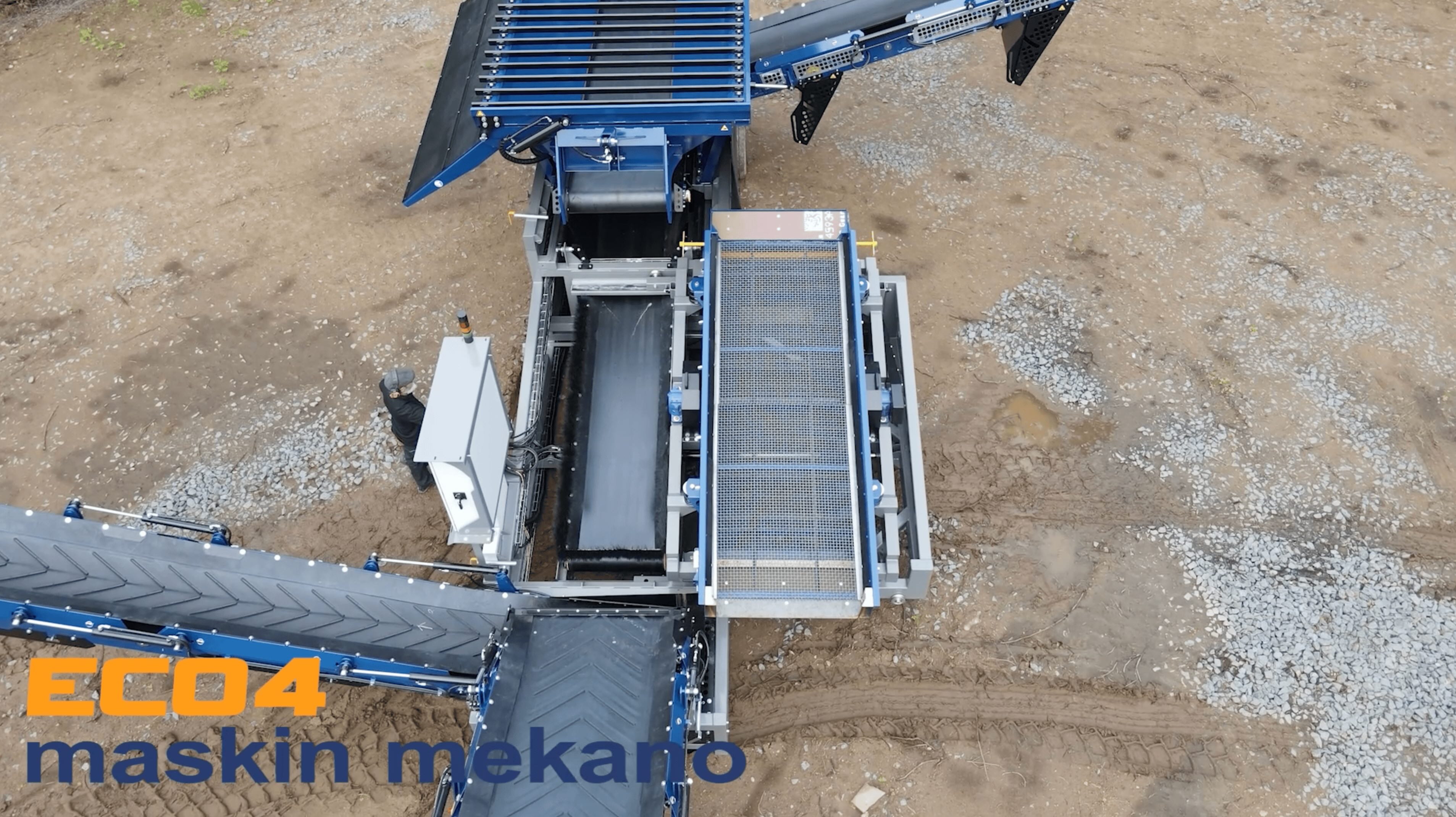
That is precisely why Maskin Mekano’s electric-powered machines are so appealing. Not only are they designed for a future in which grid power will play an increasingly important role, but they also offer benefits today. Energy efficiency is built right into the design. For example, an ECO6 runs on about 3 liters per hour. These figures are particularly relevant for companies that operate their machines for many hours and need to closely monitor their energy consumption.
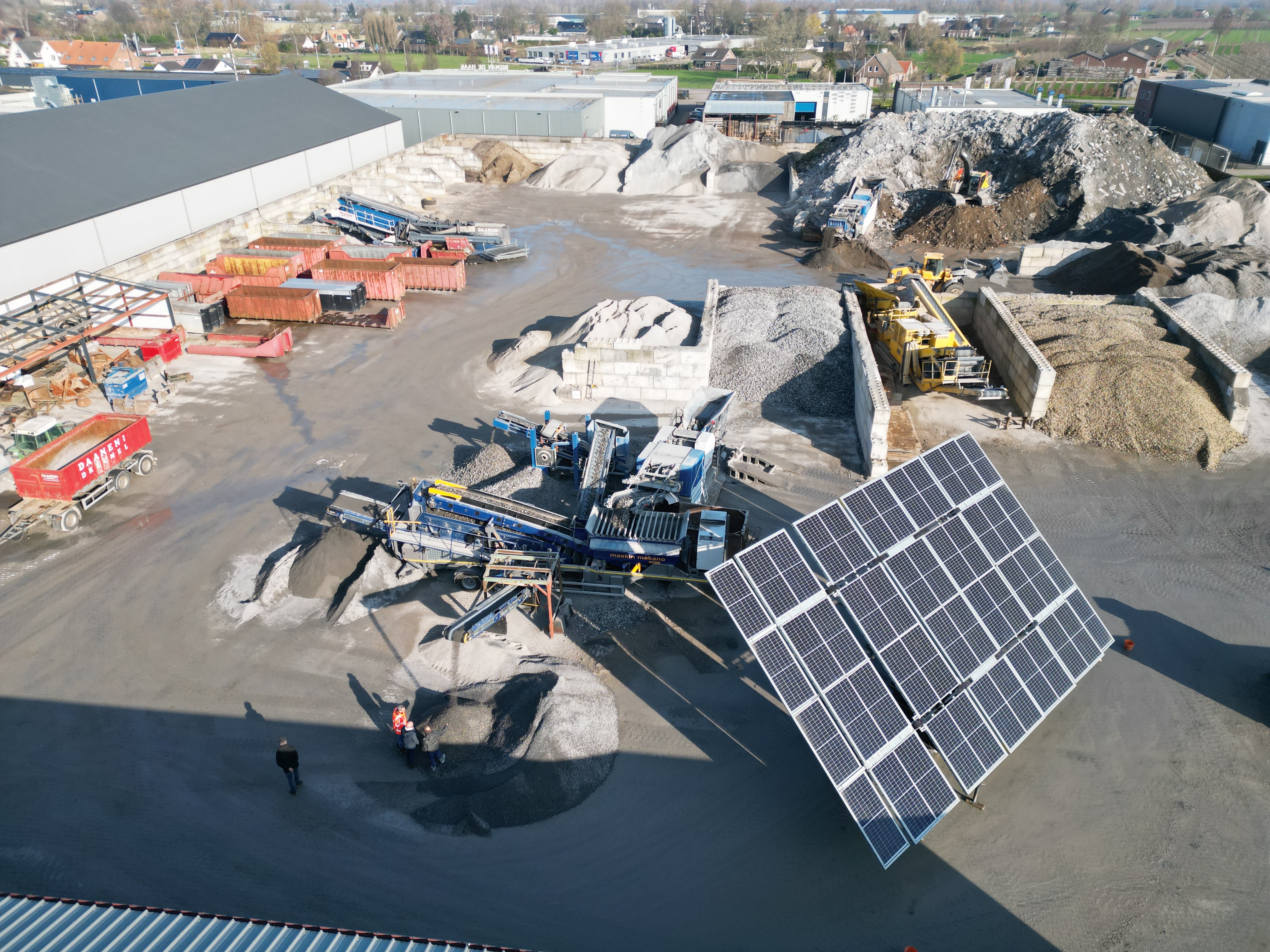
Maskin Mekano’s strength lies precisely in that combination. All of its machines are electrically powered. This makes them well-suited for a market in which grid power, lower emissions, and quieter operation are becoming increasingly important. At the same time, however, they are already economically viable today, precisely because the efficiency of electric drive systems does not depend on ideal conditions.
That is a key difference from many other solutions on the market. Some machines are marketed as electric or hybrid, but are still heavily reliant on hydraulics at their core. This limits many of the benefits. Maskin Mekano, on the other hand, has opted for a drive concept based on electric power. This creates the flexibility to operate more efficiently today and to more easily adapt to new requirements from projects, the environment, and energy infrastructure in the future.
So this preparation for the future isn’t just a marketing gimmick. It’s a natural consequence of a machine that’s built with smarter technology.
The recycling sector is changing rapidly. Projects in urban areas require lower noise levels and reduced local emissions. At fixed locations, energy consumption is being scrutinized more closely. And companies want to reduce their reliance on diesel, precisely because fuel costs remain difficult to predict. In such a market, it is becoming increasingly important to consider not only the purchase price or capacity, but also how a machine generates and utilizes its power.
This naturally shifts the focus of the discussion. The question is no longer just which machine can process a particular fraction, but also which machine does so in the smartest and most efficient way. And that’s when the difference between hydraulic and electric systems suddenly takes center stage.
An electric machine utilizes power more directly, operates more efficiently, and is better aligned with the direction in which the industry is moving. This makes it appealing not only to companies that are explicitly focused on sustainability, but also to business owners who are simply looking to keep costs down.
Anyone who views electrification solely as a sustainability issue is actually taking too narrow a view. At its core, it’s about a better way of powering vehicles: fewer losses, less unnecessary energy consumption, and a vehicle design that aligns much more logically with the demands of today and tomorrow.
This also explains why hydraulic machines are less future-proof in the long run. Not because they will disappear overnight, but because, at their core, they are less well-suited to a market in which efficiency, grid power, noise reduction, and emission control are becoming increasingly important. A machine that isn’t built around an electric drive simply misses out on part of that development.
Maskin Mekano demonstrates that there is another way. Not by treating “electrification” as just a buzzword, but by building machines that are electrically powered and therefore already offer advantages. The fact that they are also designed to run on grid power only makes them even more robust.
Electrification in recycling isn’t just a fad. It’s a logical step for companies that look beyond traditional power systems. The real difference lies not in marketing terms like “electric” or “hybrid,” but in how a machine is actually built.
That is precisely where electric-powered machines make a difference. They are more efficient, more economical, and better suited to a market where energy consumption, noise, and emissions are becoming increasingly important factors. And that advantage isn’t just for the future—it matters right now.